
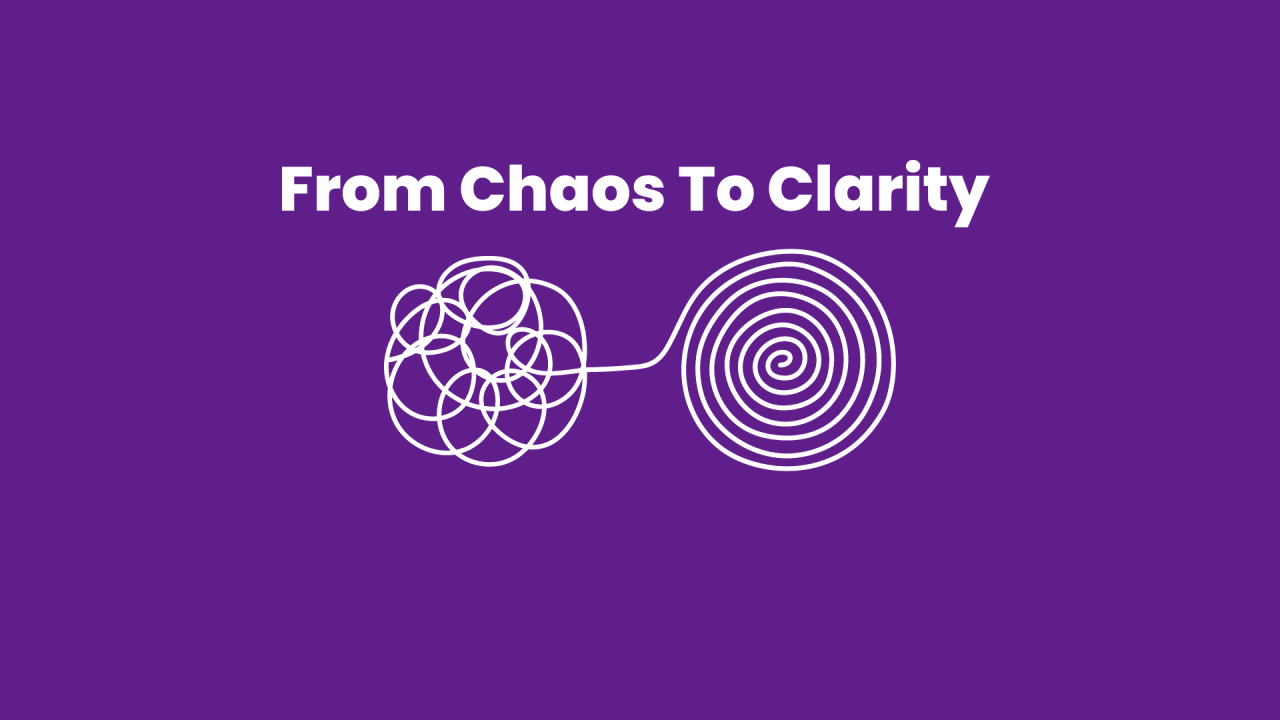
There’s a moment every early-stage founder eventually hits — not the “we’re growing” moment, but the strange, disorienting aftertaste that comes right after it.
Momentum is there. Demand is building. People are paying attention.
But internally… things feel louder than they should. Faster than they should. A little out of your hands.
No one warns you about that part — the point where growth stops feeling like progress and starts feeling like drag.
Not because anything is broken. But because the company is suddenly moving faster than the context you’re making decisions inside of.
Most founders think they’re hungry for more data, more tooling, more performance channels. In reality, what they’re starving for is clarity — the unglamorous, grounding kind that lets you breathe again and see the shape of the business without the noise around it.
When Growth Starts Moving Faster Than You
A composite example (but one I’ve seen dozens of times):
A small, fast-moving founding team raises early capital, validates demand quicker than expected, and starts stacking experiments. Ads here. Partnerships there. A quick PR push. Marketing tools piling up.
Everything “sort of” works. Nothing feels unified.
And slowly, an emotional tax starts accumulating.
The founder keeps chasing “what’s next,” not because the company needs change, but because the team hasn’t paused long enough to understand what’s already working — and why.
The irony?
At this stage, success starts to feel suspiciously like firefighting.
The Psychological Shift No Performance Dashboard Can Deliver
Clarity isn’t tactical.
Clarity is psychological.
It’s the moment when the founder stops asking:
“What should we do next?”
and starts asking:
“What do we no longer need to be doing at all?”
That’s the point where a growth strategy becomes grounding instead of chaotic.
Because the real function of a growth plan at Seed stage isn’t scale — it’s alignment.
Alignment with the market.
Alignment inside the team.
Alignment with the why behind the business, not just the machinery.
The Truth Almost No One Admits
Most early-stage companies aren’t struggling with acquisition.
They’re struggling with identity hiding behind acceleration.
Not “Who is our customer?”
…but “Who are we willing NOT to chase anymore?”
That’s the inflection point where execution stops being expensive trial-and-error and starts becoming compounding momentum.
It’s also the moment when founders stop feeling like they’re being dragged by the business and start leading it again.
When Strategy Feels Like Relief (Not Restriction)
The surprising thing is that clarity doesn’t add complexity — it removes it.
A real strategy gives the team permission to ignore everything that doesn’t ladder up to the goal. Suddenly, small decisions don’t feel heavy. The product roadmap stops shapeshifting every week. Acquisition stops being a guessing game. The team regains energy because there is a defined spine holding every effort together.
The chaos doesn’t disappear — it just stops running the room.
What Teams Become When the Fog Lifts
When clarity hits, founders usually describe it the same way:
“It feels like I can see the business again.”
Not the dashboards. Not the KPIs.
The business.
And once you can see clearly, you don’t need 14 priorities — you need three. You don’t need more channels — you need the right conditions for one to compound. You don’t need more creativity — you need focus.
The Moment Founders Usually Reach Out
People assume founders ask for help when something’s broken.
They don’t.
They reach out when they’re winning — but it feels harder than it should.
Not when revenue dips.
But when the cost of running in fog becomes noticeable:
- emotionally,
- operationally,
- creatively.
Because there’s a point early in growth where the smartest move isn’t acceleration — it’s reorientation.
If you’re currently in that strange middle territory — growing, but not grounded — you’re not stuck. You’re early. This is the stage where ideas outpace structure, and structure begins to matter more than instinct alone.
The transformation isn’t about adding more fuel.
It’s about removing the headwind.