
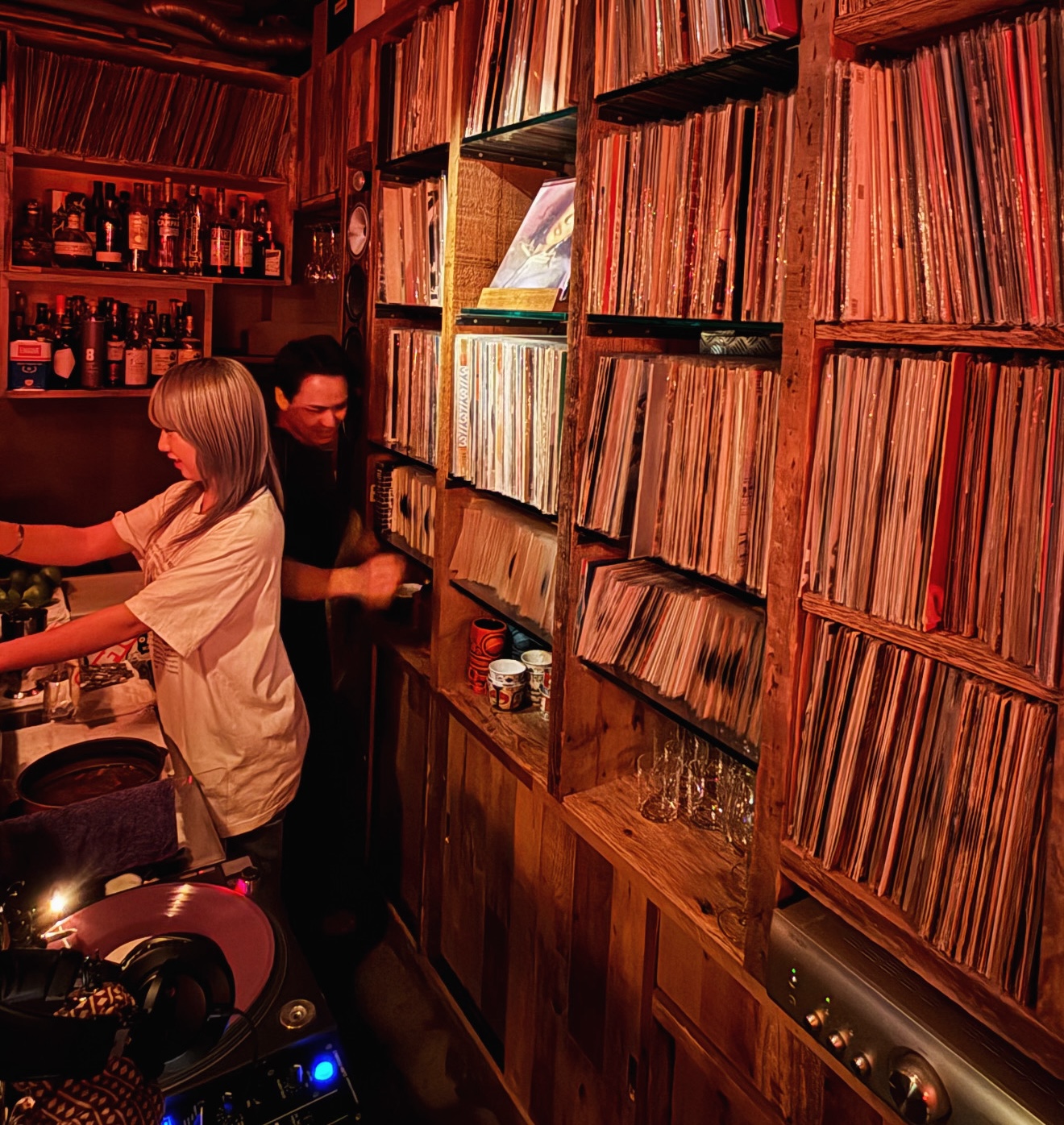
Last night, tucked away on the second floor of an unmarked building in Ginza, I stepped into Bar Record, a 15-seat micro-sanctuary where cocktails meet vinyl. It’s the kind of place you don’t find—you discover. The type of place you almost want to keep secret, even though you also want the world to know such magic exists.
Inside, a young woman curated the mood from crates of vinyl—needle dropping, room shifting—while a bartender crafted cocktails as if each were a personal commission. Nothing about this space was mass-produced. Nothing was scalable. Every sip and every song felt intentional.
And as I sat there, it struck me: what’s happening in Tokyo’s nightlife is exactly what’s happening in marketing right now.
The “Small, Intimate, Tucked-Away” Revolution
Tokyo has always been good at small spaces, but the current boom of mini bars—6 seats, 12 seats, 15 seats—signals something larger:
People are rejecting the generic. They’re craving the specific.
In these bars, you’re not just a customer; you’re part of a moment. The bartender remembers your face. The music feels chosen for the version of you that walked in that night.
It’s not about scale.
It’s about significance.
And this shift mirrors a broader cultural pivot that marketers can’t afford to ignore.
Mass Marketing Is Losing Its Voice
For years, brands have dialed up volume, reach, impressions, and automation: bigger audiences, bigger funnels, bigger budgets. But bigger hasn’t meant better—not for users drowning in generic messaging.
We’re now in the era of…
◼ Micro-experiences
Like Tokyo’s hidden bars, consumers expect brands to feel like they were built for them, not for a demographic bucket.
◼ Curated vs. broadcast
People don’t want the “Top 40 playlist” version of marketing—they want the vinyl-collector experience:
carefully selected, crafted with taste, and paced with intention.
◼ Connection over convenience
AI has made personalization easier, but humanness is what makes it meaningful. The bartender at Bar Record didn’t just mix a drink—he mixed it for me.
Marketing needs that same energy.
The New Expectation: Personal, Private, Authentic
Consumers today reward brands that…
- Speak directly to their identity, not their persona.
- Create presence, not just content.
- Feel handcrafted, even at scale.
- Offer intimacy, whether digital or physical.
We’re seeing a shift toward experiential design—both online and offline—that feels like stepping into a secret bar.
Your website should feel like the right record starts to play the moment a visitor arrives.
Your product onboarding should feel like a cocktail created for one person.
Your brand communication should feel like an invitation, not an announcement.
People don’t want more.
They want to be closer.
What Marketers Should Learn From Bar Record
So, what does this mean for businesses, creators, and anyone trying to capture attention in 2025?
1. Design for intimacy
Small, intentional touchpoints outperform big, generic campaigns.
Make your audience feel chosen.
2. Curate relentlessly
Don’t publish everything. Publish what feels like it belongs in the room.
3. Create “tucked-away” spaces
Private communities, exclusive experiences, limited drops—digital or physical.
People value what feels scarce and specific.
4. Lead with vibe, not volume
Brands win when they create a mood people want to inhabit, not just a message people forget.
Tokyo Is the Future
As I left Bar Record and stepped back into the neon hush of Ginza, I realized that bars like these aren’t just nightlife trends—they’re cultural blueprints.
People are done with the big stage.
They want the back room.
They want the bartender who knows their drink.
They want the record that fits the moment.
And they want brands that see them—not just their data.
If you’re in marketing, product, or experience design, the lesson is simple:
Build smaller.
Build more human.
Build for the person, not the crowd.
The future of marketing isn’t scale.
It’s sincerity.