
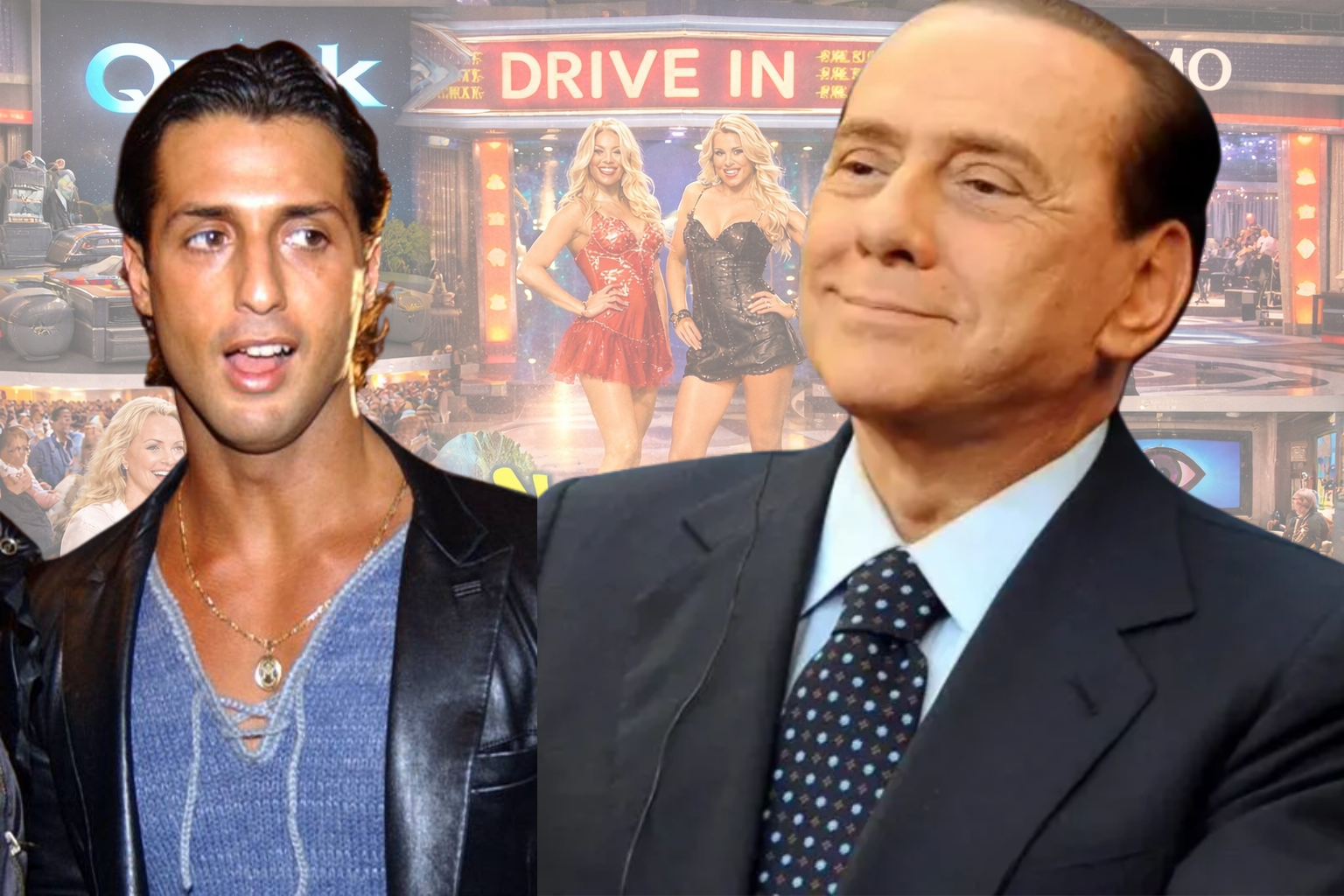
I was rewatching Videocracy – Basta apparire after finishing the Netflix documentary on Fabrizio Corona, and something clicked that I hadn’t fully articulated before.
Not politically.
Not morally.
Strategically.
Because if you strip Italian television of ideology, outrage, nostalgia, and shame, what remains is one of the clearest marketing case studies Europe has ever produced.
Two broadcasters.
Two philosophies.
Two radically different ideas of what television is supposed to do.
When Television Taught You How to Be Italian
For decades, Italian TV had a very clear voice, tone, and posture.
RAI didn’t just broadcast content — it performed authority.
You could feel it in the pacing.
In the lighting.
In the cadence of speech.
When you watched Quark, you didn’t just learn about science — you were reminded that knowledge came from above, calmly delivered by a trusted figure who spoke slowly, clearly, correctly.
On Sunday afternoons, Domenica In wasn’t chaotic fun — it was structured entertainment, carefully moderated, respectful of the living room it was entering.
Even the Sanremo Festival wasn’t really about music.
It was a ritual.
Families arguing about songs, hosts, dresses, monologues — but always within a shared, national framework. Sanremo told Italians:
“This is what matters this year.”
RAI wasn’t wrong.
But it was directional.
Top-down.
Didactic.
RAI assumed the audience needed to be guided.
Then Mediaset Walked In and Blew the Doors Open
Mediaset didn’t arrive quietly.
It arrived loud, colorful, fast, and slightly embarrassing.
If RAI spoke like a professor, Mediaset sounded like the guy at the bar who knew exactly which joke would land.
Take Drive In.
Neon lights.
Rapid cuts.
Sketches that lasted just long enough not to bore you.
Women, sexuality, absurd humor, repetition.
Culturally questionable? Sure.
But from a marketing perspective?
Perfect attention engineering.
Then came Non è la Rai.
Teenage girls dancing, talking, making mistakes — live, imperfect, relatable.
RAI would never have aired that chaos.
Mediaset understood something essential:
People don’t want excellence.
They want proximity.
They want to see someone slightly worse than themselves.
Someone accessible.
Someone real enough to feel close.
RAI Curated. Mediaset Observed.
This is the critical distinction.
RAI curated culture.
Mediaset observed behavior.
RAI asked:
“What should Italians become?”
Mediaset asked:
“What are Italians already doing after dinner?”
And then it built programming around that answer.
Later, Striscia la Notizia turned corruption into entertainment, outrage into routine.
And eventually, Grande Fratello completed the transformation.
People doing nothing.
Watched by everyone.
Famous for existing.
That wasn’t cultural decay.
That was demand finally unfiltered.
Berlusconi Understood Desire Better Than Institutions
Silvio Berlusconi the politician, deserves criticism, scrutiny, and historical judgment.
But Berlusconi the media entrepreneur, understood something most institutions refuse to accept:
People don’t want to be improved at 8:30 pm.
They want to disconnect.
Mediaset never pretended to elevate.
It validated desire without shame.
RAI told Italians who they should be.
Mediaset reflected who they already were — including the parts no one likes to admit.
Fabrizio Corona Is the Logical End Product
Fabrizio Corona didn’t appear by accident.
He is not a glitch.
He is a feature of an attention-based system.
A man who:
- Turned visibility into currency
- Understood scandals as a distribution channel
- Played media instead of being played by it
RAI could never have produced a Fabrizio Corona — not because it was morally superior, but because its structure filtered out that type of figure.
Mediaset didn’t filter.
It amplified.
What Videocracy Gets Half Right
Videocracy correctly identifies that visibility became power.
Where it simplifies the story is in implying manipulation.
From a marketing lens, Mediaset didn’t brainwash Italy.
It removed the editor.
It let demand speak directly, without cultural mediation.
And what came out wasn’t pretty — but it was honest.
Markets don’t invent desire.
They expose it.
The Real Marketing Lesson
This isn’t a story about trash TV.
It’s a story about listening.
RAI was a brand that spoke.
Mediaset was a brand that watched.
And when attention became scarce, watching won.
We see the same dynamic today:
- TikTok vs universities
- Creators vs institutions
- Algorithms vs editors
The platform that says “This is what you already want” always beats the one that says “This is what you should want.”
The Uncomfortable Truth
Mediaset didn’t lower Italian culture.
It stopped pretending it didn’t exist.
RAI tried to guide Italians upward.
Mediaset chose to walk alongside them — even into places institutions found embarrassing.
From a marketing perspective, that wasn’t corruption.
It was product–market fit at a national scale.
And markets, unlike institutions, don’t reward good intentions.
They reward relevance.