
A founder I worked with a few years ago told me something I still think about.
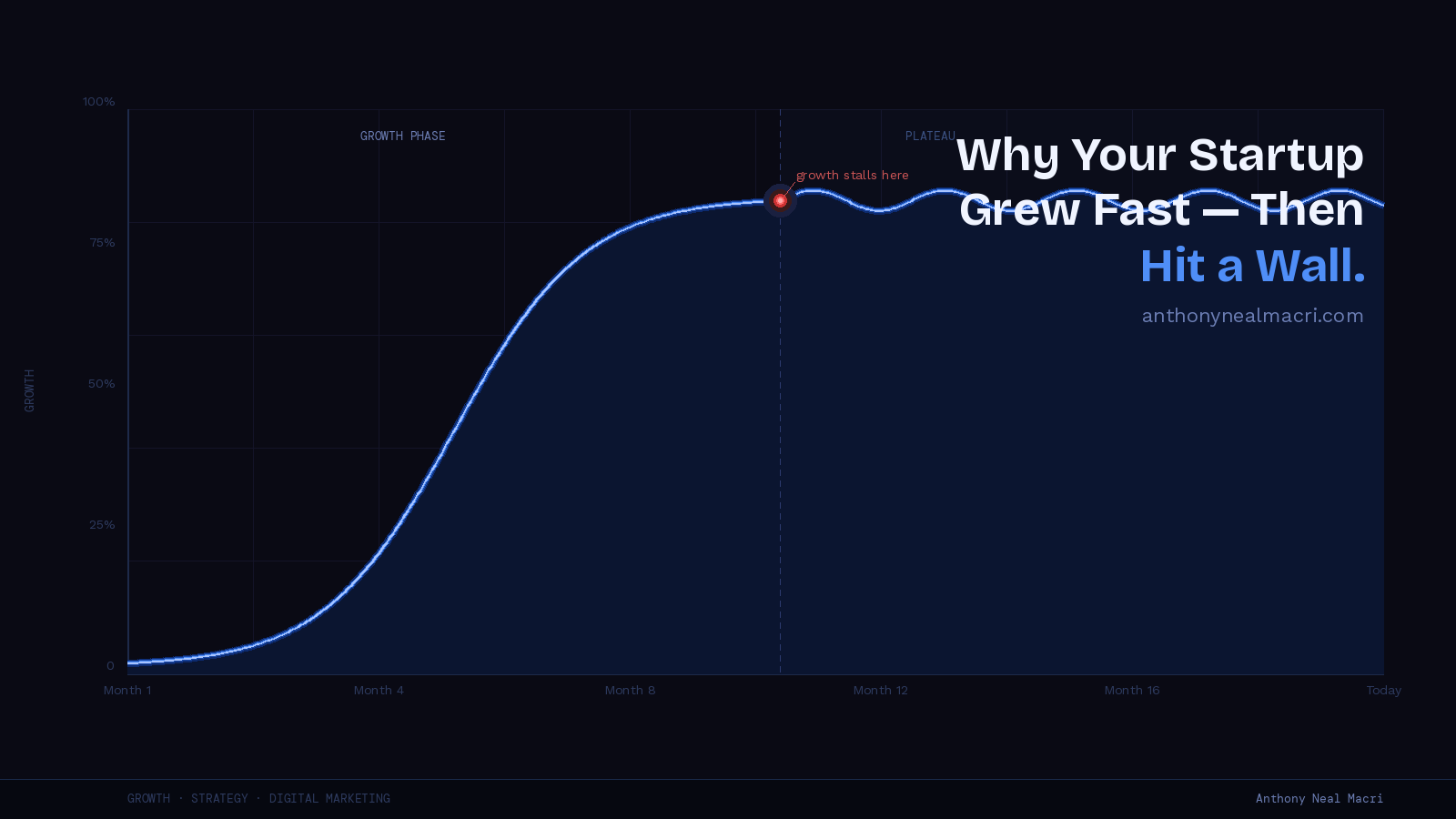
They had just closed their seed round. Product-market fit felt real. Users were coming in, referrals were happening organically, and the team was buzzing. For about eight months, everything worked.
Then it stopped.
Not dramatically; no single bad month. Just a slow, grinding deceleration. New signups plateaued. CAC crept up. The referral engine that had felt so effortless started to feel effortful. Investors were asking questions. The team was tired. And nobody could quite explain what had changed, because on paper, nothing had.
This story isn’t unique. In fact, it might be the most common story in startup growth, and yet it rarely gets talked about with honesty.
So let’s talk about it.
The Dirty Secret About Early Traction
Early traction is almost always misleading. Not in a bad-faith way, founders aren’t lying when they say it. But the conditions that produce early traction are fundamentally different from the conditions required to sustain and scale it.
In the early days, you’re selling to early adopters: people who actively seek out new solutions. They forgive rough edges. They fill in gaps with their own enthusiasm. They tell their friends because they love being early. This cohort of users is real and valuable, but they are not the market.
Geoffrey Moore wrote about this in Crossing the Chasm; the gap between early adopters and the mainstream majority is much harder to bridge than most founders expect. The majority needs different messaging, different proof points, different channels, and often a fundamentally different version of the product story.
When growth stalls, most teams assume the problem is tactical: the ads aren’t working, the content strategy needs to change, maybe they need to try a new channel. But the real issue is usually deeper.
The pattern: You built a growth system that worked for the first 10% of your market. You’re now trying to reach the next 40%, and that system was never designed for them.
What’s Actually Missing (It’s Rarely What You Think)
After 15 years working inside and alongside startups and scaleups, I’ve seen growth stalls blamed on dozens of things: the wrong hire, the wrong agency, the wrong platform, the wrong season.
Almost always, the real culprit is one of three things.
1. A growth engine built on activity instead of insight
Early-stage teams move fast by necessity. You test things, you find what works, you do more of it. But “more of it” is a tactic, not a system. When the returns on that tactic start compressing, and they always do, you need a repeatable, insight-driven engine to replace raw hustle.
The teams that scale successfully have clarity on exactly why their best customers chose them, what made those customers stay, and what triggered them to refer others. They’ve turned those insights into repeatable acquisition, activation, and retention motions.
The teams that stall are still doing what worked before, just harder and faster, which mostly means burning more money for diminishing returns.
2. Messaging that was built for the problem, not the person
Most startup messaging is product-out: it describes what the product does, why it’s better, and what features it has. This works reasonably well with early adopters who are already searching for a solution.
It rarely works with the mainstream market, who aren’t searching; they’re browsing, skimming, and making snap judgments about whether something is relevant to their life. For them, the question isn’t “is this the best solution?”, it’s “is this for someone like me?”
When growth stalls, one of the first things I audit is messaging. Not the copy, the positioning. Is the brand speaking to a psychological state that the target buyer recognises in themselves? Is there emotional resonance before there’s a features list? Is the narrative specific enough to feel personal and broad enough to scale?
Nine times out of ten, the messaging is too generic to convert anyone except people who were already going to buy.
3. Single-channel dependency disguised as a strategy
This one is particularly common in VC-backed scaleups, where there’s pressure to show efficient growth fast. Teams find a channel that works: paid social, SEO, outbound sales, influencer partnerships, and pour resources into it.
It works, until it doesn’t. Algorithms change. CPCs rise. Audiences saturate. And because the channel was treated as the strategy rather than one component of it, there’s no backup when it softens.
Sustainable growth requires owned, earned, and paid channels working together, with each one reinforcing the others. SEO builds trust and compounding traffic. PR earns credibility that makes paid media more effective. Community creates retention that improves every acquisition metric. When these work in concert, growth is resilient. When only one is working, you’re one algorithm update away from a problem.
The 2026 Context Makes This Harder
The environment startups are navigating right now has genuinely raised the bar. Ad markets are more saturated. Organic reach across most platforms has compressed. Buyers have higher trust thresholds, especially B2B buyers who are increasingly skeptical of vendor claims and resistant to cold outreach.
At the same time, AI has accelerated competition. New entrants can spin up products, content, and paid campaigns faster than ever. The bar to just showing up in a market has lowered. The bar to actually cutting through has risen.
This means the tolerance for a growth strategy built on activity-without-compounding has virtually disappeared. The startups that grow consistently in 2026 are the ones with distribution infrastructure: genuine brand equity, SEO that accumulates, a PR presence that reinforces trust, and product experiences that turn customers into evangelists.
The ones that stall are still trying to hack their way to scale.
What to Do When You Hit the Wall
If you’re reading this because something in it feels familiar, here’s where I’d start:
- Talk to your best customers. Not surveys. Real conversations. Ask them what was happening in their business the week before they signed up. What made them choose you over doing nothing. What they’d tell a colleague about you. The language they use is your next growth brief.
- Audit your acquisition mix. Which channels are compounding (getting cheaper and more effective over time)? Which are decaying (requiring more investment for the same output)? Shift resources accordingly and start building the channels you’ve been ignoring.
- Rewrite your positioning. Test messaging that leads with context and emotional resonance rather than features. Who is this for, specifically? What are they frustrated by? What does their world look like after they use your product? Answer those questions before you talk about what you built.
- Build for compounding. Every content piece, every PR mention, every community touchpoint should be building something that accumulates over time. If your current activities don’t compound, they’re just cost centres.
One Last Thing
Growth stalls are not failure. They’re a signal that what got you here won’t get you there, which is one of the most valuable pieces of information a company can have, if it’s willing to act on it honestly.
The founders and teams who figure this out are the ones who stop doubling down on what used to work and start asking harder questions about what they actually need to build next.
If you’re in that moment right now, I’d be glad to help you think through it.
Work with Anthony
I work with early-stage startups and VC-backed scaleups on growth strategy, SEO, messaging, and user acquisition. If your growth has stalled, or you want to build a system that won’t, let’s talk.